
Ownership
See who supplied or owns a source so approval requests go to the right person.
The event source library is the private evidence layer inside Event Growth Studio, not the public microsite or a media room. It manages the facts, documents, media and approved content that feed the digital event guide, discovery assets and promotional drafts.
Structured for discovery. Assisted by AI. Approved by your team.
Conceptual workflow
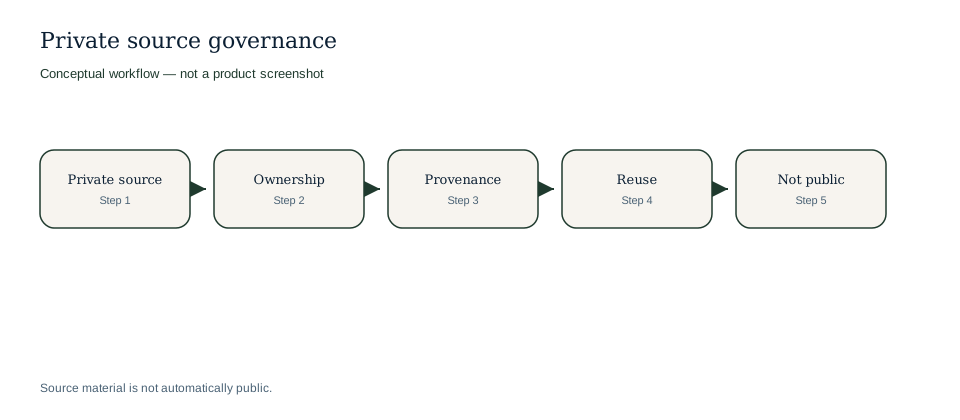
Private sources stay private until you approve use.
Conceptual workflow
Conceptual workflow. The library is not a public media room.
The library helps reviewers understand what each guide section, metadata draft or promotional output is based on.
See who supplied or owns a source so approval requests go to the right person.
Track whether content came from a programme file, partner submission, venue note, media asset or approved page.
Expose stale or uncertain material so teams know which claims need checking before publication.
Make approved content available for related guide pages, discovery assets and promotion outputs without making the whole source workspace public.
Example only: these records show how private source material can support public content without exposing the whole library.
| Private source | Reusable for | Review check |
|---|---|---|
| Venue operations note updated on 12 March with Gate B access instructions. | Visitor information page, accessibility FAQ and arrival email draft. | Confirm the note is current before publishing access guidance. |
| Sponsor-approved paragraph and logo usage note. | Sponsor page, partner pack and campaign announcement draft. | Check rights, credit line and sponsor owner approval. |
| Ticketing source with early-bird deadline and official checkout URL. | Ticket guidance copy and call-to-action links. | Verify deadline and availability with ticketing before publication. |
Private source
Venue operations note updated on 12 March with Gate B access instructions.
Reusable for
Visitor information page, accessibility FAQ and arrival email draft.
Review check
Confirm the note is current before publishing access guidance.
Private source
Sponsor-approved paragraph and logo usage note.
Reusable for
Sponsor page, partner pack and campaign announcement draft.
Review check
Check rights, credit line and sponsor owner approval.
Private source
Ticketing source with early-bird deadline and official checkout URL.
Reusable for
Ticket guidance copy and call-to-action links.
Review check
Verify deadline and availability with ticketing before publication.
The Source Library is the private source layer. It can hold press notes, source collateral, draft images, credit requirements and rights information, but it is never a publicly browsable media room. Approved material can later support a public Media page, a curated Media Kit or a restricted Press Room only after organiser review.
The source library can show ticket-related facts to content teams, but the ticketing system remains the authority for prices, availability, checkout rules, orders, inventory and scanning. Marketing pages can reference those facts after review; they do not become the operational source of truth.
The library sits between intake, AI assistance, structured guide pages and human review.
Material enters through intake or approved page work.
Ownership, provenance and freshness signals are stored with the source.
AI-assisted sections can draw from trusted source material.
Reviewers can check page claims against the underlying material.
Approved content can support related guide pages, structured data, summaries and promotion assets.
A folder of files can store assets, but it rarely answers governance questions during page review.
Explore connected Event Growth Studio workflows without leaving the creation and CMS cluster.
It is focused on event content governance for digital event guide creation and reuse, not broad digital asset management across every brand asset and not a public media room.
No. Source Library material is private source collateral for authorised users. Only organiser-approved material can move into an optional public Media page, curated Media Kit or restricted Press Room.
Yes. Approved sources and content can support related guide pages, discovery assets and promotion outputs while preserving context.
The library is designed to surface stale or uncertain material so reviewers know what needs checking before approval.
No. Ticket facts remain read-only and canonical in the ticketing system.
Provenance helps reviewers check generated sections against the source material before content is approved.
Keep ownership, provenance and freshness visible before content moves toward the public microsite.
Connect approved source material to AI drafting, review decisions and discovery-focused outputs from the same event record.
Preserve official ticketing, rights-sensitive media and partner controls while still making approved information reusable.
Private by default.
Reusable when approved.