
One event record across teams
Dates, venues, owners, ticketing context, suppliers, workforce, and accreditation reference the same event so teams do not rebuild the operating picture at every handoff.
Coordinate readiness before doors open, live delivery while the event runs, and review after close. Ticketing, ingress, workforce, accreditation, issues, and reporting stay connected for promoters, venues, festivals, and conference teams.
New to the category? Read what an event operations platform is. If your immediate need is planning scope, suppliers, budgets, and run sheets, explore event management software.
Illustrative product view · Example data
Event operations platform
Modules
6
Connected
Events
24
In flight
Teams
42
Assigned
Readiness
91%
On track
Show-day readiness
An event operations platform is software for show-day control and live workflows — coordinating teams, suppliers, gates, credentials, communications, and reporting while an event is live.
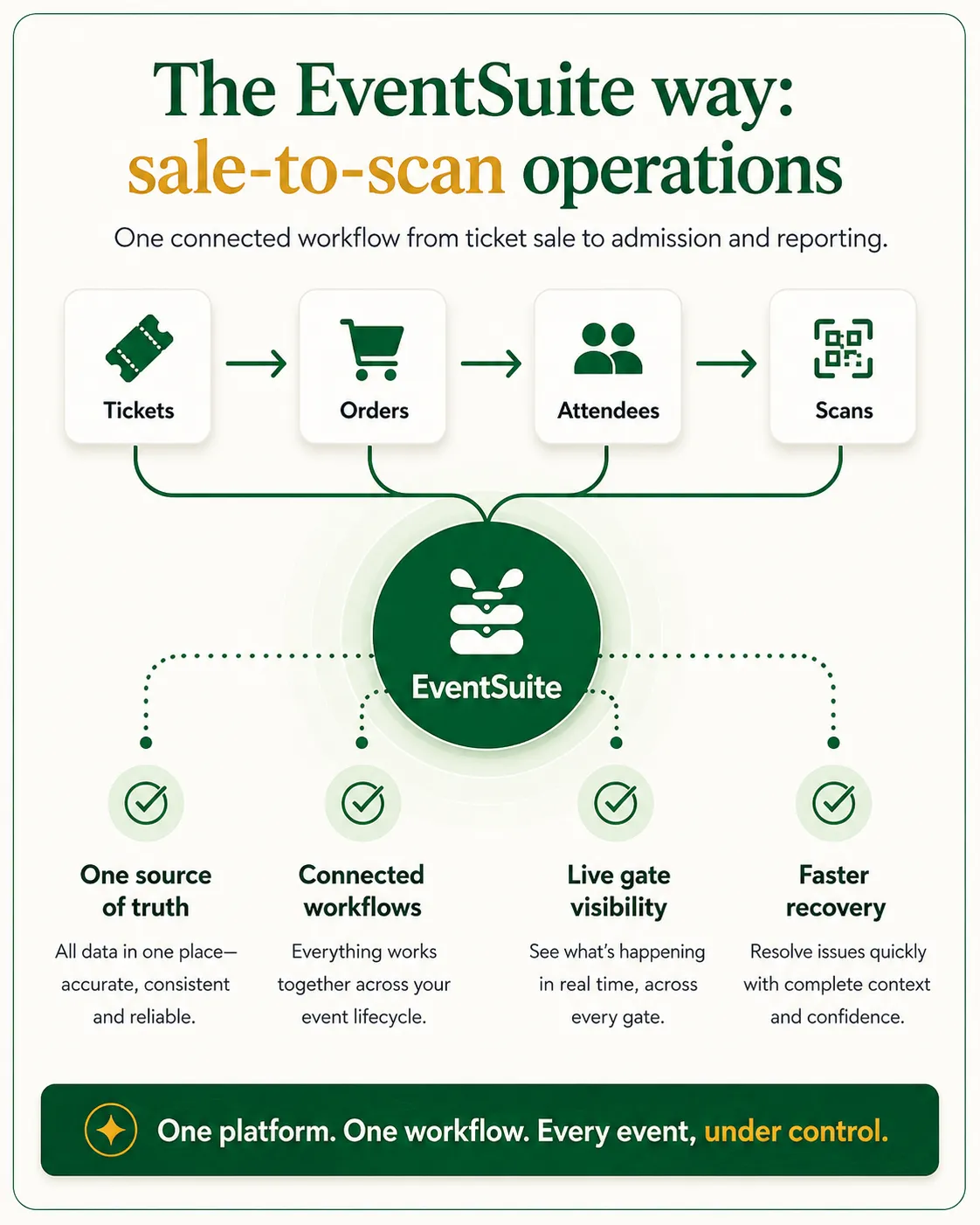
EventSuite connects ticketing, ingress, workforce, accreditation, production, venues, and analytics on one event record so promoters, venues, festivals, and conferences can move from planning into live delivery with fewer handoffs.
These product-workflow examples show how operational context moves between EventSuite modules without relying on invented performance claims.
Dates, venues, owners, ticketing context, suppliers, workforce, and accreditation reference the same event so teams do not rebuild the operating picture at every handoff.
Ticket inventory informs ingress preparation, workforce assignments connect to credential status, and approved suppliers remain visible when production teams move into show-day coordination.
Attendance, issue logs, staffing context, and supplier notes remain tied to the event record for post-event reporting and the next programme.
Approved customer case study evidence is not yet available for this page.
Each module handles a distinct job while sharing the same event plan and live context.
Scope, dates, owners, documents, milestones, and planning context for every team. Operational teams need one shared plan instead of conflicting versions across departments.
Event management softwareInventory, sales, guest lists, capacity signals, and admissions readiness. Ticket sales should inform staffing, communications timing, and event-day throughput.
Event ticketing platformStaff, vendor, crew, and contractor approvals, roles, zones, and credential issuance. Access readiness should connect to supplier and workforce records before gates open.
Event accreditation systemShifts, roles, coverage, vendor staff submissions, and deployment visibility. Staffing plans should reflect attendance demand and credential requirements.
Event workforce managementApproved suppliers, vendor staff onboarding, RFQs, and onsite handoffs. Supplier movement and compliance affect site access, production, and reporting.
Event supplier management softwareShow flows, live tasks, supplier notes, issue logs, and handovers. Live delivery needs a controlled view for show day — not static documents alone.
Production ops softwareBookings, site readiness, recurring event continuity, and venue-side staffing context. Venue teams run multiple events and need continuity across bookings.
Venue management softwareAudience, staff, and stakeholder messaging tied to event stages. Timing breaks when comms sit outside the event plan.
Event marketing platformAttendance, operations, supplier activity, and post-event review outputs. Finance and operations need connected data instead of manual spreadsheet merges.
Event analytics platformFrom first plan to last scan — see the flow buyers care about.
Workflow 1
Confirm ticketing, ingress, workforce, accreditation, suppliers, and run sheets so gates and live teams inherit the same readiness picture.
Workflow 2
Coordinate admissions, credential checks, issue triage, supplier movement, and supervisor handoffs from one operational view.
Workflow 3
Review attendance, incidents, staffing coverage, and supplier outcomes so the next programme launches with clearer context.
Workflow 4
Set scope, dates, venues, suppliers, and owners so every team starts from the same plan.
Workflow 5
Launch ticketing, track orders, and align staffing and credentials before guests arrive.
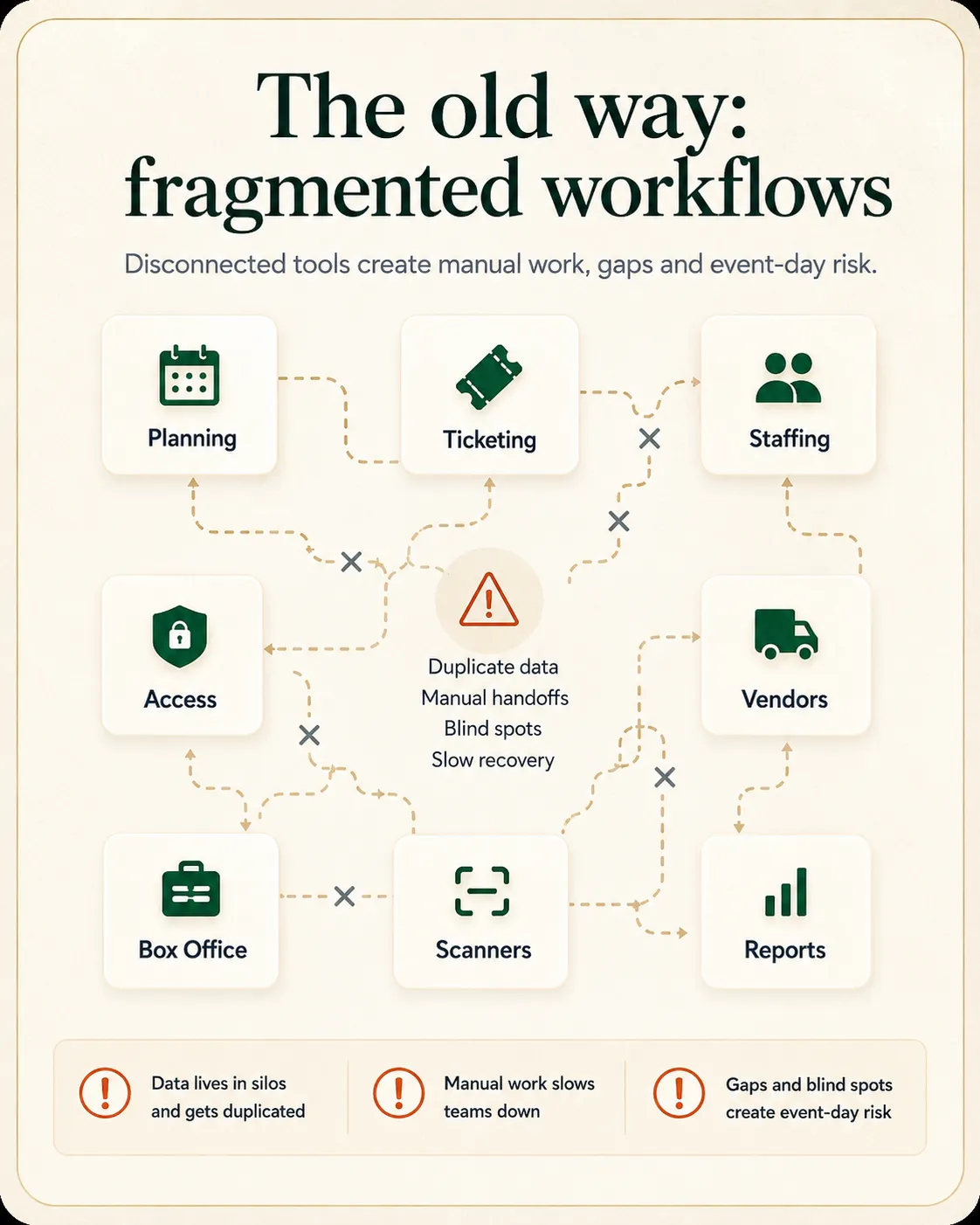
These are common signs that spreadsheets, ticketing-only systems, and disconnected handoffs are limiting live delivery.
Multiple teams maintain separate spreadsheets for the same event. Accreditation is handled by email instead of a clear approval process.
Vendor data is not linked to access control or credential readiness. Workforce schedules live in a different system from event planning.
Ticketing data does not connect to staffing, admissions, or reporting.
Live issues are managed informally across chat threads. Post-event reporting takes too long because data is scattered.
Promoters, venues, festivals, and conferences use EventSuite when planning and show day need to stay aligned.
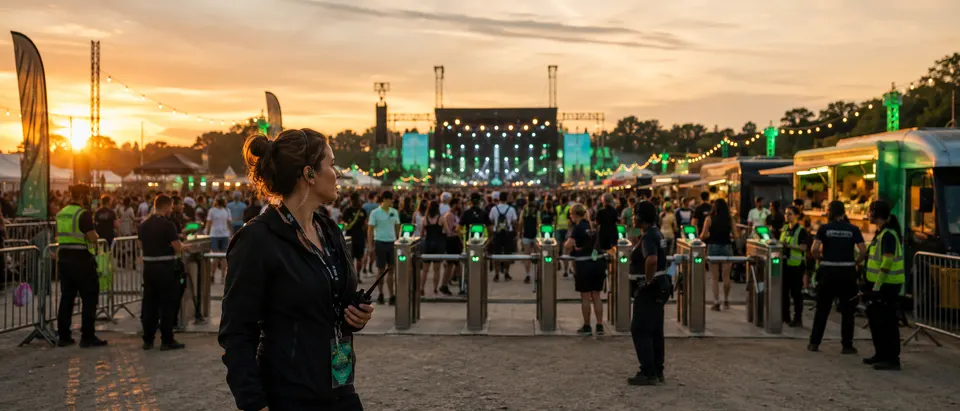
Connect ticketing, vendors, workforce, accreditation, production schedules, and live ops for multi-zone delivery.

Run bookings, event setup, workforce, admissions, and reporting together across recurring venue activity.

Coordinate ticket sales, audience activity, staffing, and event-day delivery instead of splitting commercial and live views.

Keep registration, exhibitors, session staffing, supplier access, and reporting connected through setup and show days.
Organiser-owned ticketing, crew coverage, and clearer show-day visibility.
Planning, ticketing, workforce, accreditation, suppliers, production, venues, communications, and reporting share context instead of living in silos.
Teams see readiness across staffing, credentials, suppliers, schedules, and admissions instead of discovering gaps at the gate.
Accreditation connects approvals to credentials and access enforcement for crew, vendors, media, and contractors.
Approved suppliers and their onsite staff move through onboarding, review, and access preparation on the same platform.
Ticket sales and attendance signals inform staffing, communications, capacity, and post-event review.
Run sheets, show flows, live tasks, supplier handovers, and issue tracking support event-day control.
Most teams feel the gap when ticket sales live in one place, staffing in another, and gate decisions in messages.
Jump to the module that matches your next decision.
What is an event operations platform?
Read the category definition and comparisons before choosing modules.
Event management software
See how planning and event setup anchor broader live delivery.
Production ops software
Review show-day schedules, handovers, and issue control.
Event operations checklist
Practical readiness rows for planning, staffing, access, and show day.
Event workforce management
Tie staffing, shifts, roles, and deployment to the same event plan.
Event accreditation system
Link approvals, credentials, and controlled access for crew and vendors.
Event ticketing platform
See how ticket sales feed admissions, staffing, and event-day readiness.
Platform module map
See how EventSuite modules connect across the wider platform.
EventSuite helps teams plan events, sell tickets, coordinate workforce and suppliers, manage accreditation, run admissions, communicate with stakeholders, and review results from one connected platform.
Ticketing-only tools focus on sales and admissions. EventSuite connects ticketing to workforce, accreditation, vendors, production schedules, live issues, communications, and reporting so commercial data informs live delivery.
Yes. EventSuite connects vendor onboarding, workforce planning, accreditation approvals, credentials, and access readiness so supplier staff, crew, volunteers, and contractors stay governed in one place.
Yes. EventSuite supports festival and venue teams where multi-zone delivery, recurring bookings, temporary workforces, supplier movement, and accreditation require connected planning and show-day tools.
EventSuite reduces reliance on spreadsheets for schedules, approvals, credentials, supplier records, and live changes. Teams may still use spreadsheets for early sketches, but governed delivery belongs in the platform as events scale.
EventSuite supports live delivery through production ops, run sheets, workforce visibility, accreditation validation, supplier coordination, issue tracking, and reporting tied to the same event plan used during planning and ticketing.
The what is an event operations platform guide explains the category and common operating model. This page shows how EventSuite connects modules, readiness workflows, and show-day coordination for teams evaluating the platform.
Read the full category definition and comparisons on the EventSuite guide to what an event operations platform is.
Next step
Book a demo to walk through planning, ticketing, staffing, and show-day tools — or explore the platform overview to see how modules fit together.