
Event Growth Studio

Create event websites with structured AI assistance — not blank prompts

Event Growth Studio does not generate an arbitrary website from a prompt. The AI event website builder is the structured creation capability inside Event Growth Studio, using purpose-built event templates and trusted facts so AI can help populate a guide your team reviews.

Structured for discovery. Assisted by AI. Approved by your team.

Conceptual workflow

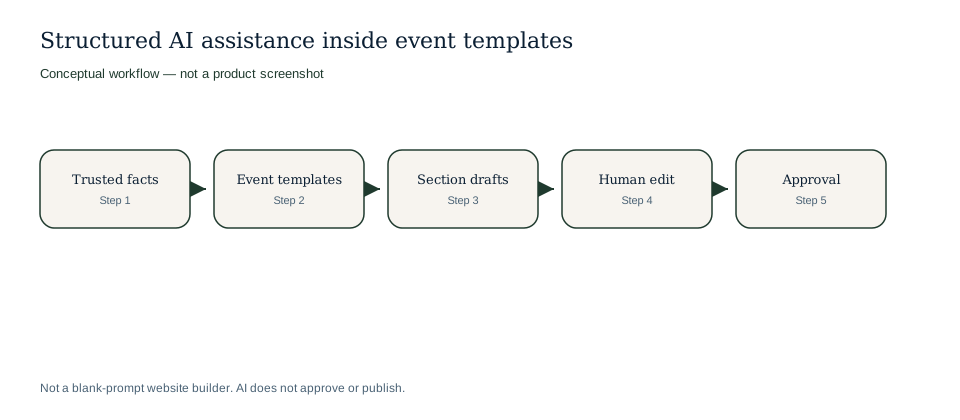
Conceptual workflow of trusted facts flowing into event templates, section drafts, human editing and approval.

Structured AI inside templates — not a blank-prompt builder.

Conceptual workflow

Proof that AI stays inside event structure
Conceptual diagram of purpose-built templates with AI section drafting under human approval.

Conceptual workflow. AI does not invent layouts, approve content or publish.

Not a blank-prompt website generator

Event Growth Studio does not generate an arbitrary website from a prompt. Generic AI website builders can create layouts quickly, but event teams need more than a persuasive landing page. Event Growth Studio starts from event structure: audience questions, page families, trusted facts, approval needs and publishing workflow. The structure is purpose-built by Event Growth Studio; AI helps populate and improve the content within it.

  • Create structured pages for the event, programme, speakers, tickets, venue, access, sponsors and media needs.
  • Use AI at section level after source material is available.
  • Keep canonical event facts visible instead of burying them in generated copy.

How it differs from generic AI website builders

The builder is designed for event marketing teams that need speed, discovery structure and fact control, not a free-form Appy Pie-style site from a marketing prompt.

Generic AI builder

  • Generic layouts can miss programme, venue, ticketing, partner, sponsor, accessibility and visitor-information requirements.
  • Prompt-led creation depends on the prompt writer knowing every event content requirement.
  • Copied facts can drift away from the official source and ticketing authority.
  • Autonomous output can blur review, approval and publishing responsibility.

Event Growth Studio

  • Purpose-built event templates give the guide a complete structure before AI drafts copy.
  • Guided page creation recommends the content estate an event usually needs.
  • Canonical facts stay connected to source material and official ticketing.
  • Drafts remain drafts until a person reviews and approves the page.

Example: structured inputs before AI drafts

Example only: a conference team could provide source information first, then ask for section drafts inside the selected page family.

  • Source provided by organiser

    Programme spreadsheet with session titles, rooms and times.

    Product assists with

    Session summary drafts and agenda page sections.

    Human checks before publish

    Room accuracy, session descriptions and schedule changes.

  • Source provided by organiser

    Venue access PDF and transport notes.

    Product assists with

    Visitor guidance, arrival FAQs and accessibility summaries.

    Human checks before publish

    Access instructions, parking rules and current travel advice.

  • Source provided by organiser

    Ticket type names from the ticketing system.

    Product assists with

    Plain-language ticket guidance that links to the official checkout.

    Human checks before publish

    Prices, availability wording and purchase-path accuracy.

A practical build flow

Teams can move from event facts to a private preview without asking AI to design the layout or own the truth.

  1. 1

    Choose the event structure

    Select the page families and audience information the complete event guide needs.

  2. 2

    Bring in trusted sources

    Add programme notes, ticket facts, venue details, biographies, partner copy and media assets.

  3. 3

    Draft sections with AI assistance

    Create starting copy for sections, summaries, FAQs and promotional variants inside the approved templates.

  4. 4

    Review page by page

    Check claims, tone, source accuracy and readiness before approval.

  5. 5

    Preview the real digital event guide

    Review the actual private guide experience before publishing selected pages.

Protect the facts buyers care about

Event website copy often fails when operational facts are copied manually into marketing text.

Dates and times

Use trusted event source facts as inputs so draft copy can be checked against the current event schedule.

Prices and ticket rules

Ticket facts remain canonical and read-only; generated content does not replace ticketing logic.

Venue and access information

Audience guidance can be drafted from approved sources while reviewers confirm practical details.

Speaker and performer profiles

Biographies and programme descriptions can be adapted into page sections with source ownership preserved.

AI assistance with publishing safeguards

The builder uses AI to help content teams move faster, not to remove human judgement.

  • The structure is purpose-built by Event Growth Studio; AI helps populate and improve content within those templates.
  • AI works at section level from trusted facts, approved sources and reviewer guidance; it does not invent layouts.
  • AI drafts remain editable suggestions; people review, approve and publish.
  • Canonical dates, venues, ticket facts, prices and availability stay read-only and are not rewritten by generated copy.
  • Official ticketing remains the authoritative purchase destination for prices, availability, checkout, orders and inventory.
  • Human review is required before any AI-assisted page or promotional draft moves toward publication or use.
  • Event Growth Studio does not replace checkout, payments, orders, inventory or scanning systems.
  • The product supports clearer event pages, discovery foundations and promotion assets, but it does not guarantee rankings, rich results, AI citations, sales or discoverability.

Frequently asked questions

Can the AI builder create a full event website?+

It can help create the page structure and draft sections for a complete digital event guide or microsite, including audience, programme, venue, ticket, partner and promotion content. It does not invent arbitrary layouts from a prompt.

Will AI change ticket prices or availability?+

No. Canonical ticket facts are treated as read-only source facts. The builder does not replace ticketing, checkout, inventory or payment systems.

Do we need to write prompts for every page?+

No. Guided creation and page-family structure reduce blank-prompt work, then AI can help with specific sections from source material.

Can we publish only part of the website?+

Yes. Approved pages can be published independently while other pages remain in draft or review.

Does this guarantee traffic or sales?+

No. It supports better structured and more complete event content, but does not guarantee rankings, AI citations, discoverability or sales.

Use the builder inside a governed event-site workflow

Start with the approved Event Growth Studio structure, then let AI help populate event pages without turning prompts into the source of truth.

Use guided creation to choose the page families and source material the event actually needs.

Publish the reviewed microsite beside your main website or as the event site when the guide is ready.

Keep search foundations, structured event information and official ticketing connected to the same approved content.

Structured before prompting.

Reviewed before publishing.

Tell me more