
Content coverage
See whether pages answer core questions about tickets, programme, venue, travel, accessibility, sponsors and visitor needs.
Event Growth Monitoring is the content-quality monitoring capability inside Event Growth Studio, not an analytics, attribution or ticket sales platform. It helps teams find content gaps, stale facts and improvement opportunities without claiming causal ticket attribution.
Structured by Event Growth Studio. Assisted by AI. Approved by your team.
Conceptual workflow
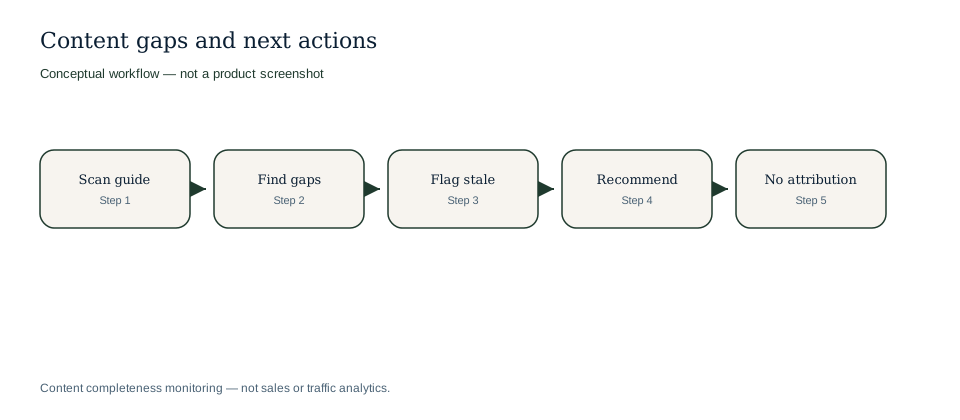
Completeness monitoring — not analytics or ticket attribution.
Example output
Findings become review tasks. They do not claim traffic, rankings or ticket-sales causation.
Missing: step-free access guidance on the visitor page
Stale: early-bird wording no longer matches official ticketing facts
Next action: return ticket guidance to review with the ticketing owner
Harbour Lights Festival (example event) — example gaps only.
Event Growth Studio monitoring is about whether the event content estate is complete, current and useful. It does not replace web analytics, attribution tools, campaign reporting or ticketing reports, and it does not claim causal ticket-sales attribution.
Example only: findings become review tasks or draft improvements; they are not automatic edits or sales attribution claims.
| Monitoring signal | Recommended content action | Boundary |
|---|---|---|
| Visitors have no page explaining step-free access or arrival entrances. | Create or update visitor guidance from approved venue sources. | Does not prove ticket sales impact or replace analytics. |
| Programme pages mention speakers but speaker profiles are missing. | Draft profile sections from approved biographies and route to review. | Does not guarantee rankings, AI citations or engagement. |
| Ticket page links to checkout but final-week FAQ is stale. | Review ticket guidance and visitor FAQ before republishing. | Does not manage prices, availability, checkout or inventory. |
Monitoring signal
Visitors have no page explaining step-free access or arrival entrances.
Recommended content action
Create or update visitor guidance from approved venue sources.
Boundary
Does not prove ticket sales impact or replace analytics.
Monitoring signal
Programme pages mention speakers but speaker profiles are missing.
Recommended content action
Draft profile sections from approved biographies and route to review.
Boundary
Does not guarantee rankings, AI citations or engagement.
Monitoring signal
Ticket page links to checkout but final-week FAQ is stale.
Recommended content action
Review ticket guidance and visitor FAQ before republishing.
Boundary
Does not manage prices, availability, checkout or inventory.
The product helps teams inspect content quality rather than simply counting traffic.
See whether pages answer core questions about tickets, programme, venue, travel, accessibility, sponsors and visitor needs.
Identify pages that may need review because dates, programme details, venue notes or ticket facts changed.
Spot disconnected pages where visitors need clearer paths to programme, ticketing, partner or visitor information.
Find approved content that could support summaries, campaign drafts, partner assets or structured data.
Review pages, metadata, links, source records and structured event information for coverage and consistency.
Find audience questions that are unanswered or only partially addressed.
Decide which gaps matter for search foundations, visitor confidence, partner needs or campaign reuse.
AI can assist with section drafts from trusted facts, approved sources and structured templates.
Recommendations are not auto-applied; organisers review and approve content updates.
The product helps teams improve content quality without pretending to prove every ticket outcome.
Explore connected Event Growth Studio workflows without leaving the creation and CMS cluster.
No. It focuses on event content quality, coverage, freshness and recommendations. It does not replace analytics, attribution, campaign reporting or ticketing reports.
No. It can show content gaps and improvement opportunities, but it does not provide causal ticket attribution or guarantee sales.
No. Recommendations can inform drafts and updates, but organisers review and approve changes before publication.
It can surface missing audience answers, stale facts, weak internal links, incomplete source coverage and opportunities to reuse approved content.
Yes. It can help identify content and relationship gaps that affect search foundations and machine understanding, without guaranteeing rankings, traffic or AI citations.
Check content completeness, freshness and internal-link strength without pretending to replace analytics or attribution.
Route recommended fixes back through drafting, review and microsite publishing instead of auto-applying them.
Use monitoring findings to improve search foundations and AI-system understanding from the same approved event guide.
Quality monitoring, not sales attribution.
Recommendations stay reviewable.